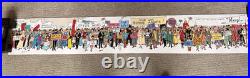
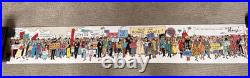
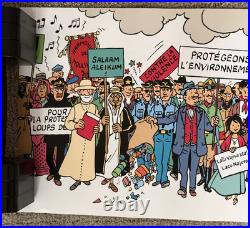
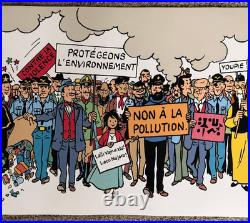
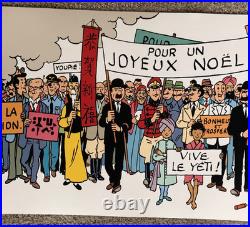
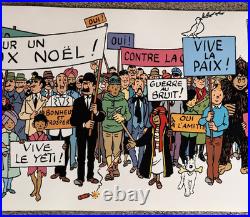
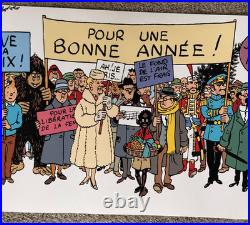
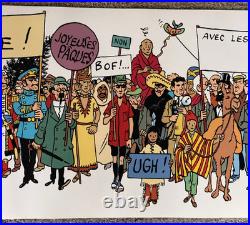
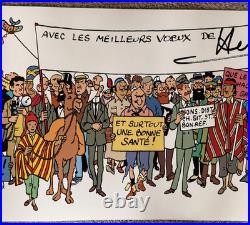
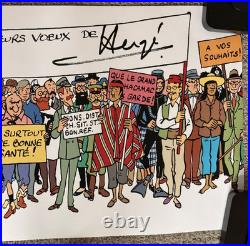
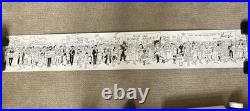
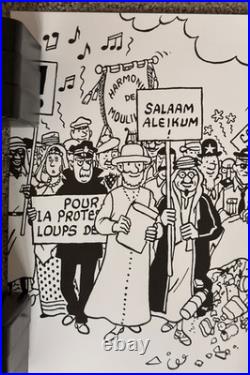
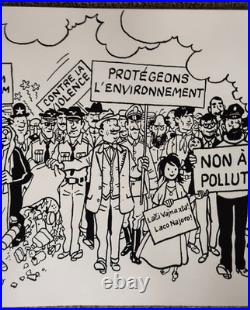
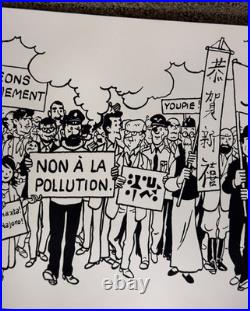
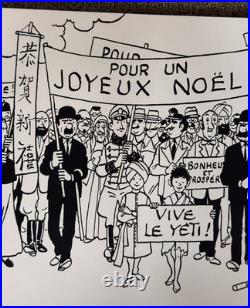
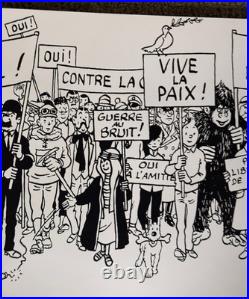
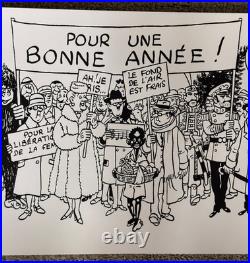
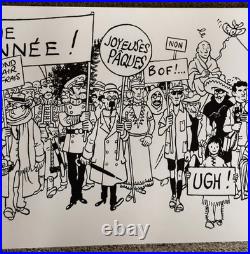
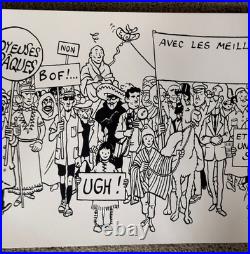
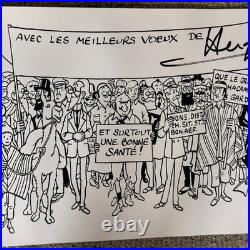
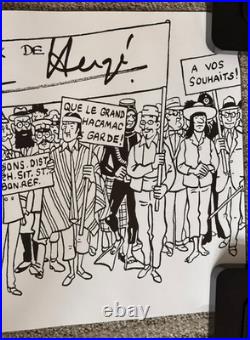

Hergé in Quebec City. Photo Marie-Josée Turcotte, Icon, provided by the Musée de la civilisation de Québec. A fresco with all the characters of Tintin’s albums welcomes visitors to the entrance of the Musée de la civilisation in Quebec City. Presented at the Musée de la civilisation, in Quebec City, until October 22, the exhibition. City gives a good idea… But we would have liked more! Presented last winter in Paris, this classic bill of law will delight young and old with 300 drawings, comics, models, paintings, photos, archival documents and extracts of documentaries on one of the greatest bedeists of the. But why did his designers (Studios Hergé and Moulinsart) create a journey that starts from the death of Hergé to end with his birth? The initiative is a bit disturbing, but you have the opportunity to visit the other way around.. That said, we learn a lot about the famous Belgian cartoonist. Starting with his talents as a painter who could have made him a notorious artist in the 60’s if he had not preferred to devote himself totally to comics. Seven of his oils are hung, paintings in which we feel the influence of Klee and Miró. A great art lover, Hergé collected: the museum exhibits his silkscreen prints by Roy Lichtenstein, a portrait of Hergé by Warhol or acrylics by Jean-Pierre Raynaud, this French artist whose Quebec City destroyed, two years ago, the marble work. That France had offered him in 1987. In a showcase, objects of African art illustrate the research that Hergé systematically carried out for his comics. “He did not travel, so to document himself, he went to museums, including the Royal Museums of Fine Arts of Belgium, ” says Marie-Christine Bédard, project manager at the Museum of Civilization. On marche sur la Lune. In 1954, Hergé had a rocket model made as realistic as possible. Hergé was trying to stay as close to science as possible. He was also going to look for his inspirations in the cinema, as we saw in. Where the monkey is inspired by King Kong. A wall is lined with Tintin albums in all languages. In the middle, there is a white cross made of. And the Blue Lotus. Marie-Christine Bédard explains that the cross is linked to the fact that Hergé and his second wife supported the Dalai Lama and the Tibetans in the fight against the Chinese occupier. Further, we learn that the 62-page standard of Tintin’s albums stems from the Second World War, when the shortage of paper forced the publisher Casterman to demand that Hergé reduce the length of his stories. It was in this period that Hergé published in the daily newspaper. Then under the control of the Nazis, which earned him criticism at the end of the war. In a documentary directed by Gérard Valet and Henri Roanne in 1976, he justified himself by saying that he had no sympathy for the Germans and had simply worked to earn a living. We discover the plates of the first Tintin. Land of the Soviets. First published in a supplement of the Belgian Catholic newspaper. Tintin’s character has not yet its final form. The line, the dialogues and the humor will be refined later. A space describes the main characters of. The Tintin: Dupond and Dupont, Professor Sunflower, Castafiore, butler Nestor, etc. Then, we find Hergé in 1934 with his meeting with the Chinese student Chiang Tchong-Jen, just before the release of the. A friendship that allowed him to better understand Chinese culture and adopt the style of the “clear line”, characteristic of Hergé’s drawing, the limits of each character being defined by a black line in China ink. A room exhibits advertisements that Hergé made in the 30’s. Then, the last room evokes his youth. Scouts and his happiness in telling anecdotes are the source of his passion for comics. His first drawings, his schoolbinder and the boards of bedeists that influenced him are exhibited. The exhibition is exhaustive – the documents presented are really of great value – but it suffers from a lack of contrasts. We would have appreciated more detailed contexts, with a more bushy police station. Closely scrutinized for more than 30 years, Hergé’s albums have sometimes had underlying motivations. Tintin in the Congo. Magnified the Belgian colonialism of the time and was criticized for his stereotypes. The Scepter of Ottokar. It would have been a good idea to address the reflections that emanate from the subjects dealt with in Hergé’s albums, books that often reflected the beliefs and prejudices of the time of their publication. Hergé has profoundly marked the world of comics. He has inspired many illustrators and still fascinates children from all over the world. But his stories deserve to be contextualized and explained to the youngest. If we do not want to perpetuate the wanderings of the past.